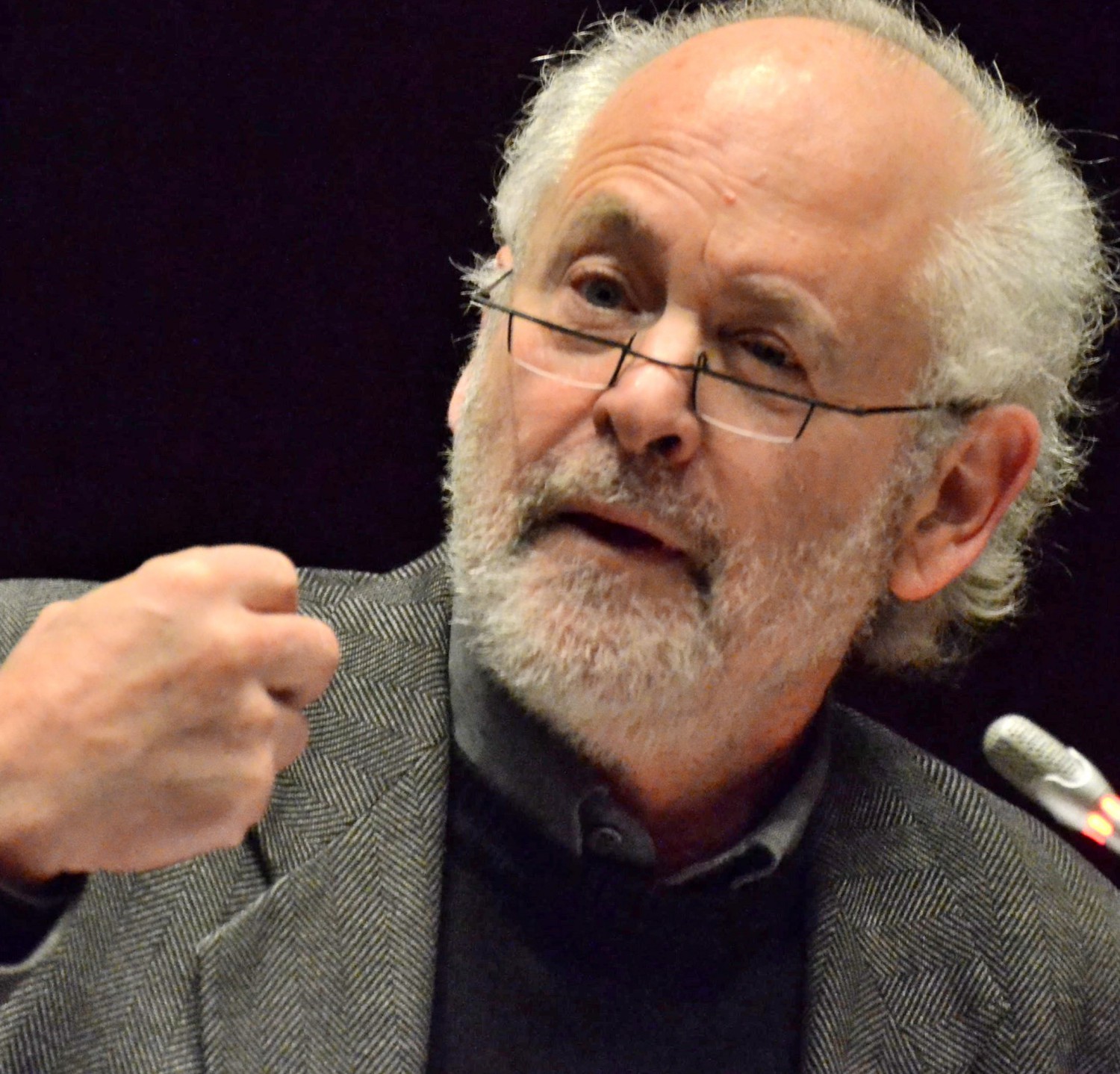
Athambile Masola, taxi drivers and the politics of space and security
Athambile Masola describes the daily experience of harassment in public transport. While gender equality is enshrined in our constitution the value is not part of the consciousness of most South Africans, men and women. A few years ago, there was a lot of talk about this constitution having created a crisis of manhood in South Africa. It is telling that that discourse is hardly heard any more, as there appears to be a continuing high tolerance of sexual abuse and harassment of women. The apprehensions of those practising aggressive masculinities seem to have been unfounded as freedom of movement of women remain under threat
Che Guevara- song and video in Spanish with English subtitles
Beethoven Sonata no 23 Appasionata, Daniel Barenboim
Raymond Suttner, Why grieve over Mandela’s imminent passing?
I try to understand why I am so upset about Mandela’s imminent passing. Continue reading
Government and Alliance partners are unwilling to take proper steps to acknowledge status of AMCU
Government and Alliance partners are unwilling to take proper steps to acknowledge status of AMCU
Since the Marikana massacre it has become clear that ANC allied National Union of Mineworkers has been fast losing ground to AMCU. Government and alliance responses have been reckless, treating the displacement of NUM as quasi-criminal activity, notoriously describing AMCU as a vigilante union. This is no way to seek peace in the industry
Phumi Mtetwa, It is thanks to the bill of rights that the rainbow flag can fly proudly over the rainbow nation
The giant scandal that Zuma owns. (Mail and guardian editorial)
Nina Simone, Don’t let me be misunderstood, 1964
Nina Simone: I grew up in the South and Midwest during the civil rights years and their aftermath. It challenged everything about my world and changed my perception of life. Not a single day passes where the lessons learned are not effecting my perceptions, my outlook, or my aspirations. What is right now comes from their paths, what is wrong is from where any of us have lost the way. It’s on each of us to make it better for each other. Selflessness brings us into the better angels of our nature. This is my psalm of love to my heroes, the bravest of the brave.
Mandela and Fidel Castro -footage including Madiba wearing Cuban shirt at rally
In 1991 Nelson Mandela, as newly elected ANC president, succeeding the ailing Oliver Tambo, visited various Latin American states. I was part of the back up on that tour. In Cuba the meeting with Fidel Castro saw an immediate bonding between the two. At the rally to celebrate the attack on the Moncada barracks, Mandela wore the Cuban Guayabera shirt, as seen in the clip. Mandela thanked Cuba for their support to liberation movements, notably in the battle of Cuito Cuanavale where the South African Defence Force was defeated and pushed out of Angola. Fidel responded to Mandela with a very warm tribute to his qualities.
When the ANC delegation met with Fidel and his aides,Madiba gave a summary of the process of negotiations. Then he said that the ANC could still walk out of the talks. Fidel, who had listened very attentively, responded by asking, what would the strategy then be to arrive at the ANC’s goals? Mandela did not have an answer, for he may have merely raised the option without any sense of it being realistic for he was committed to the negotiations succeeding. In some ways it appeared like the a resurfacing of the impetuous younger Mandela, albeit purely in conversation.
In the course of the visit, posters of Mandela were everywhere and songs were composed in his honour. On a visit to a sports complex, Mandela whose boxing persona remained very much part of his identity, asked ‘what has happened to Stevenson?’ referring to the famous Cuban heavyweight who won the olympic title three times. Fidel responded that Stevenson was there and called him up to where they were standing and the two boxers embraced.
Nelson Mandela, first TV interview, 1961
The interview was conducted while Mandela was underground and being hunted by the police. It is noteworthy for various reasons. In referring to the franchise, the interviewer refers to formal education as a requirement for political activity and Mandela makes it very clear that black people in South Africa understood their political aspirations, whether or not they had access to formal education, then generally denied under apartheid. The interview may also be the first time that Mandela indicates that the response of the apartheid regime was compelling the liberation movement to reconsider its previous commitment to purely non-violent forms of resistance.
Around this time, not having any idea who Mandela was, I used to catch the bus at the Cape Town parade to go to my school, which was in Newlands. There used to be notices at the bus stop referring to ‘any meeting in regard to Nelson Mandela.’ I did not know what that was about although I was fairly politically conscious. But I like many other whites was then cut off from what the ANC had to say
Charlie Chaplin, The Immigrant (1917)
Article on Graca Machel, wife of Nelson Mandela
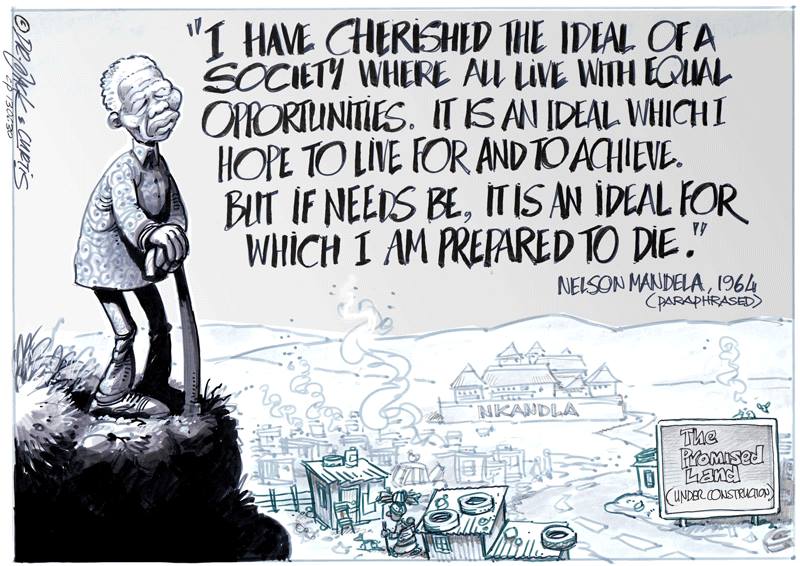
Cartoon, by Dr JackandCurtis, click to enlarge please
Message to Nelson Mandela from besieged Syrians
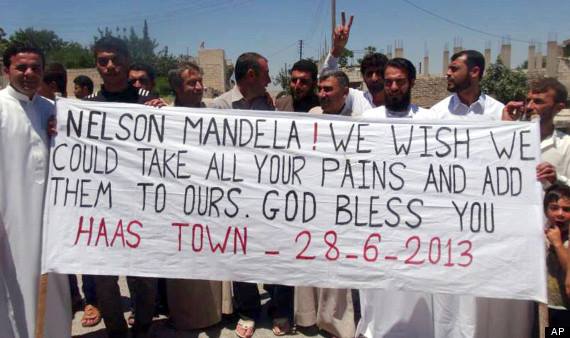
With thanks to Ziad Majed
Raymond Suttner, The influence of Walter Sisulu and Moses Kotane in moulding the political development of Nelson Mandela
There is no doubt that Mandela was at times after his release more popular than the ANC and that he could sometimes act without organisational authority. Continue reading
Raymond Suttner: Mandela as underground ‘black pimpernel’, late 1961-a glimpse
Below is a glimpse of Mandela operating underground as the ‘black pimpernel’ before his arrest in 1962. Continue reading
Mandela dances with Statistics South Africa choir on presentation of 1996 census results

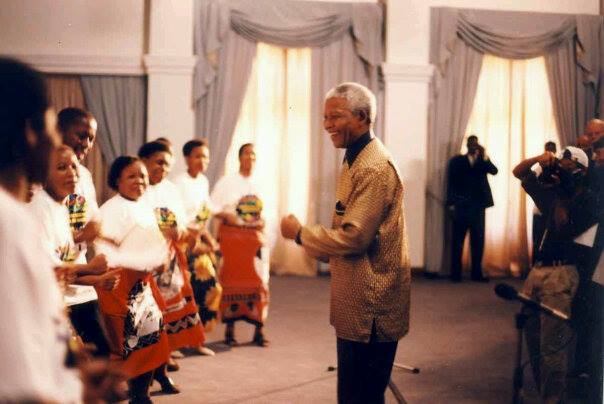
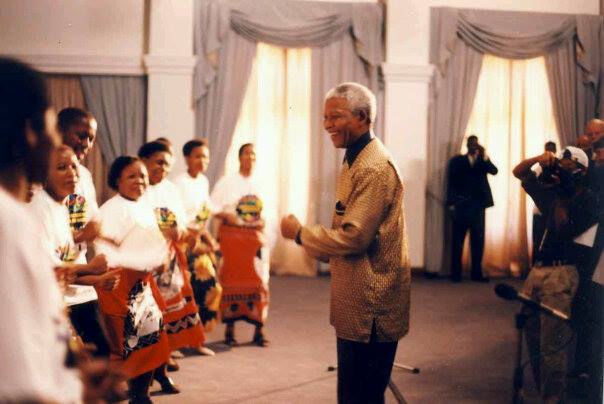
Thank you to Tony McGregor for photographs
Raymond Suttner, Mandela:strong, tough and tender


There is a myth that to be strong and manly one cannot also be tender and gentle. Mandela, in a range of ways dispels any such myth. Thereby his life is a challenge to tough and violent masculinities, that are all too prevalent in South Africa today. For Mandela there were times where he found it necessary to fight, both as a boxer and in MK, times where he had to show his strength as in prison. But this photograph with a baby is only one of a range of manifestations of his tenderness.
Nelson Mandela with Graca Machel who married in the late 1990s

 Raymond Suttner