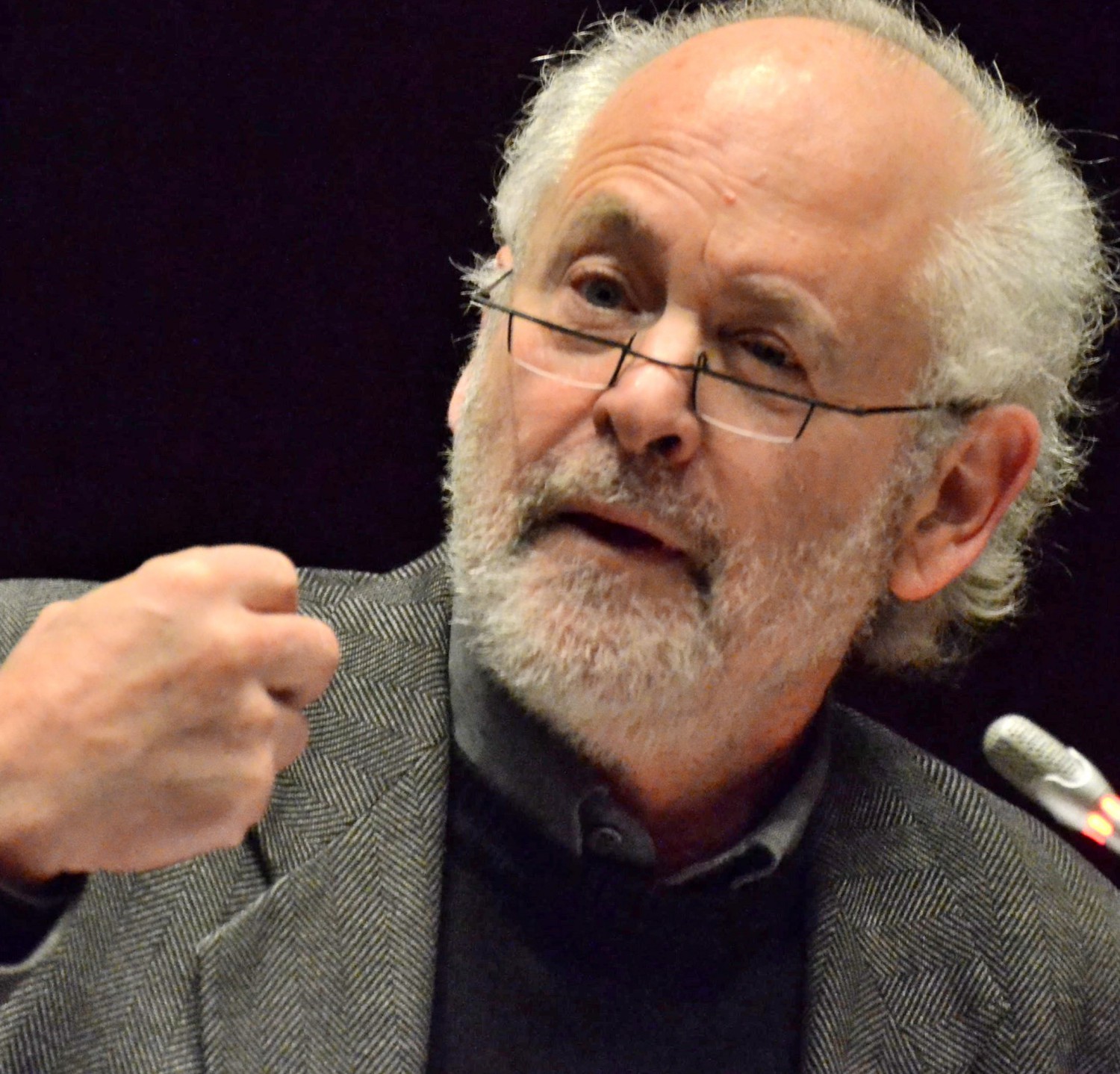
“Jailbird”, Sergeant Joubert and me (Polity, 20 August 2017, reprinted Daily Maverick and enca.com)


Recently a relative phoned and said “Bertie Joubert” sends regards.  I asked who this was and he said he is the warder who got me a lovebird/parakeet when I was in prison.  I did not know his first name but it turned out to be Sergeant Joubert.  He had always been kind to me when I was held during the states of emergency of the 1980s. He was in charge of the prison “shop” and went to great trouble to buy me fruit and dried boerewors outside the prison. +

That was my second period in prison. In 1975, when I was a lecturer in Durban I had been arrested for ANC/SACP underground activities and tortured with electric shocks by the security police.  I was then charged and convicted and spent 8 years in jail, until May 1983.

I had planned to leave the country on an exit permit, that is, without a passport, not being allowed to return. This was because on release many faced heavy restrictions, making political activity very difficult. But we-as political prisoners in Pretoria- concluded that the situation had changed under PW Botha, who became Prime Minister in the early 1980s.   It was possible that I would not be restricted. I was needed for political work inside the country.

I feared being re-imprisoned but agreed with the reasoning.  I said to myself: if I was wholly committed to liberation of the people of South Africa, I could demand no less of myself than black comrades, who remained in the country after release or lacked the resources to leave.

At first, I operated with a fairly low profile, as an academic, but after a while I wrote and gave speeches on the Freedom Charter and became active in the UDF, especially in the period of “ungovernability” and “popular power”.  During the “short” 8-month state of emergency of 1985-86 I went underground to avoid arrest, though I continued my activities – re-emerging again when the emergency was lifted, although not staying where I had been before.  In June 1986 a state of emergency was re-introduced and this time I was held for 27 months, 18 in solitary confinement.

To the prisoner there was a big difference in being held by different authorities: the security police, in a police cell, in a prison as an awaiting trial or sentenced prisoner or as a Terrorism Act or state of emergency detainee.

The security police, unlike warders, were often highly motivated to address the threat we represented and did not spare their energies, whether in assaulting us or other aggressive and often unlawful conduct.

My overall experience of the security police was of viciousness and sadism, although some who interrogated me in the 1980s were fairly sophisticated and engaged me in debate over my ideas on popular power (possibly with a view to bringing related charges). Absence of violence may have been because they did not think I had information on clandestine activities.

When I was tortured in 1975 there was no identifiable sense of common humanity between the torturers and me.  I was enveloped in an atmosphere of violence and terror.  They wanted information and I was tortured because I refused to release this.

When convicted, in November 1975, I expected to join other white political prisoners (held separately from black prisoners) but instead spent three and a half months in solitary confinement in Pretoria Maximum Security Prison (the death cells).  “Maximum” was an unpleasant place, where one had no direct view of the sky, seeing glimmers of it through mesh wire above the exercise yard. Warders with rifles patrolled above and I was alone, in an atmosphere of hostility. Alone, with the constant singing of the “condemned”.

One day I returned to my cell to find 10 security police. One was a notorious torturer “Spyker” van Wyk from Cape Town, who appeared to relish his reputation and the fear, he sensed he induced in me. They interrogated me about underground units in Cape Town. I knew nothing but had no idea what they thought I knew and feared what could happen.  My lawyer said there was nothing to stop them from interrogating me after sentence, though he knew no precedent.  They suddenly stopped coming, though I did not know it had stopped.  What is fearsome about torture and interrogation generally is one does not know it has ended.

When I joined the others in Pretoria Local, earlier prisoners had mitigated the harshness of the 1960s.  Although conditions were difficult-especially denial of all news- an atmosphere of “peaceful coexistence” reigned between the prisoners and the “boers”.  We did not have the emotional resources and energy for constant battles and they also preferred peace, having some respect for our capacity to create “drama”, including arguing, written complaints and calling lawyers.

The authorities had ceded significant areas of control to us. We decided when and how we would clean cells and passages and the pace at which we would work. For some things we still depended on the authorities, battling to enjoy  “privileges” to which we were entitled, especially letters, visits and uninterrupted studies.

Before my second detention in June 1986 I had acted more or less legally.  I thought I would be released later that month if the anniversary of the Soweto uprising passed peacefully, but I got it wrong. Months and months passed.  They gradually released all other white political prisoners in the country. I was alone.  They held leaders as long as possible in order to restore “governability”.

I had thought that I could “handle” solitary because my previous fairly lengthy periods had been manageable, but this time I became more and more depressed, though reluctant to admit it initially. At first, I relied on intellectual work to get by but it became more and more difficult to concentrate. Every day I was weary and depended more and more on physical exercise to survive.  I ran so much in a confined cement yard that I needed an operation on my knee.

As the months went on and on, solitary gradually wore me down. Letters seldom arrived. There was hardly anything getting through the prison walls. Near the end of my detention, the authorities started to worry about my psychological condition. They were not concerned about my wellbeing, but worried that they might land in trouble if anything happened to me. I took advantage of the situation to apply to have a pet, confident it would succeed. I had seen that sentenced prisoners had pet birds and I successfully applied to have a pet lovebird/parakeet.

One day Sergeant Joubert arrived with this beautiful little red-cheeked parakeet in a shoebox.  A gangster-prisoner serving a long sentence (who asked to be called the Godfather or “GF”), with whom I had unofficial but regular contact, explained how to clip the wings so the bird could not fly away. It was then a question of training it.  I held the bird and it bit me. I let it carry on biting, even though my hand was very sore- to get it used to me. After a few days, it relaxed, and spent most of its time under my tracksuit or on my shoulder. It was wonderful having this beautiful little creature with me. Its head smelt like a baby and it had no one else in the word besides me. I called him “Jail Bird” or “JB”.

I bought a cage through Joubert. When I put the bird inside, it would pace up and down, much like prisoners did in their cells. When it was time to sleep, I would put a towel over the cage and JB would sleep.

We were inseparable.  The bird would eat out of my mouth. The moment it heard me open a “granola bar” packet it stuck its beak into my mouth. When I exercised, the bird would sit on my shoulder. If it was angry with me, it retreated into my tracksuit, and sat there. If I tried to touch it, JB would bite me.

I met with Bertie Joubert a few weeks ago for the first time since my release in 1988. He told me he had tried to make contact through Wits, where I had worked at the time of my detention, and other ways.  We are very different people. Separated by prison bars and different experiences, we nevertheless share a common humanity.


The no confidence vote-where to now? (Polity 15 August 2017, reprinted Daily Maverick and enca.com)


Everyone appears to agree that last week’s motion of no confidence in President Jacob Zuma signified something very significant and different in South African politics.  For the first time, there was a motion of no confidence where around 30 -40 ANC MPs voted for the motion or abstained and it was defeated by a slim margin.  The basis on which President Zuma’s presidency was defended was not to point to qualities and attributes that demand that Zuma be retained as head of state. Instead those who defended him claimed to safeguard the ANC and the existing, lawfully elected government against an alleged attempt at “regime change” or a coup d’état.  In other words, the motion of no confidence was transformed in the discourse of the shrinking number of defenders of Zuma into an expression of loyalty towards the ANC, facing attack as an organisation. This line of thinking was followed by Zuma himself calling for disciplinary steps against those who voted for the motion. (https://www.businesslive.co.za/bd/politics/2017-08-14-follow-the-anc-conscience/)

It is impossible to gauge the sentiment in the country with precision.  One has to rely on opinion polls and judgments on the basis of what one sees or reads. But it appears reasonable to suggest that the decision to reject the motion in parliament was out of line with what very many people feel.  They may not hold Zuma responsible for everything that has impaired the conditions of their lives. But certainly, the level of lawlessness and constant scandals are seen by many to have undermined democracy in general and also contributed to the deterioration of very many people’s living conditions.

Actions taken by Zuma himself have had direct effects on the economy as with the decline in the value of the rand and relegation to “junk status” both of which have had direct knock on effects on the cost of living – with rises in the price of basic items in many people’s diets rocketing, relating in many cases to the cost of petrol, transport and similar items.  Hardly anything which has an overseas or USD component has been left unaffected and every one of us-especially the poorest section- can see this increase, sometimes almost doubling of prices of basic items in our shopping baskets over the last few years

With regard to 2019, the motion of no confidence appears to add weight to the view that the ANC may well fail to achieve over 50% of the vote in the national elections.  This may be because Zuma’s preferred candidate Nkosazana Dlamini-Zuma becomes ANC president and a divided ANC will not work effectively for an ANC victory.  Alternatively, it may be because Cyril Ramaphosa or someone else wins and that also divides the ANC.  At this point in time there is no candidate for the ANC presidency who appears to command a basic level of consensus in the face of an opposition challenge to ANC hegemony.

Many commentators noted that if Zuma had been forced to resign the ANC would not have been able to unify behind any candidate. Many see this as a factor that restrained some from supporting the no confidence motion.

It is not only the problem of Zuma but that the ANC itself no longer unites its members and supporters behind a set of agreed values, even though these may be chanted or given ritualistic expression. The ANC of today is a shell inhabited mainly by self-seeking individuals who link their fates with one or other powerful individual in order to safeguard their future.

That is not to say that everyone in the ANC is a crook. There are certainly some individuals, most of whom have been removed from top positions, who have sought to safeguard the fiscus from looting and who do their job as best they can and wish to restore the organisation to the values that they attribute to the ANC of previous periods.

Even if there is some romanticism about what the ANC has been in the past, there is no doubt that no ANC presidency has mired the organisation so deeply in criminality and scandal as that of the present. There were scandals in the past but they are memorable more for their exceptionality than their being commonplace as is the case today.

The scandal of the present is that scandal is the norm.  It does not really stand out in the light of very, very many people being part of webs of state capture and an atmosphere of shamelessness buttressed by impunity.

The opposition parties state of readiness for government

The opposition parties may prevent the ANC from reaching 50% of the vote and combine in an alliance government.  But, led by the DA, they do not seem to be in a position to stand in for what the ANC was once seen to offer people in terms of hope for a better life and a dynamic democratic order.

That is not to say that they ought to try to “stand in” for what the ANC has been or claimed to be, although both the DA and the EFF claim to be more true to the values of the Freedom Charter than the ANC of the present. The DA relies primarily on its claim to efficient government, more technocratic than compassionate. That is why their showcase example of government –Cape Town presents stark contrasts between the lives of the wealthy and the poor, many of the latter living in squalour and indignity.

The DA’s response to the no confidence debate –immediately aiming, apparently without consultation with most of its caucus and other opposition parties- to dissolve parliament -is not the type of action that aims at broadening its support base. It is part of an over-reliance on the politics of symbolism as opposed to the hard slog of winning over people through acting on their needs and building organisation.  The Business Day, in a sympathetic but critical editorial, pays tribute to the DA’s achievements through the courts, but cautions against this call (https://www.businesslive.co.za/bd/opinion/editorials/2017-08-14-editorial-da-overshoots-the-mark/)

The EFF continues to build its public presence, though it remains unclear what level of support they enjoy beyond the 6-8% they have claimed in national and local government elections. They successfully pursued legal action and have made important gains, notably in the wake of the Nkandla judgment. But its impact on the public has been mainly through spectacle- its uniform, which has important symbolic connotations (See Raymond Suttner “The Economic Freedom Fighters’ Politics of Dress”, in Recovering Democracy in South Africa, Jacana Media, 2015, pp. 223-225 and Candess Kostopoulos “South Africa’s EFF: excellent politics of props and imagination” The Conversation, 2 June 2016: https://theconversation.com/south-africas-eff-excellent-politics-of-props-and-imagination-59918 ) and its willingness to physically fight for its rights in parliament.  That they give the bouncers a run for their money is something that goes down very well in a macho country like South Africa.

But there has always been something troubling about the militaristic element in the EFF –an appeal to macho notions of leadership- Malema being termed the “Commander in Chief “ and others belonging to various “commands”.  The notion of being a “fighter”, applied to all members, can easily be conflated with physical fighting –again not a good notion to commend to others in a society as violent as ours. (For concern with the masculinist character of the EFF from within the party, see Simamkele Dlakavu, “On the EFF and gender” 4 August 2017 City Press: http://www.news24.com/Columnists/GuestColumn/on-the-eff-and-gender-20170804.)

The organisation has also raised questions over recent statements in KwaZulu-Natal. The organisation was correct to show respect for cultural sensitivities in seeking a meeting with King Goodwill Zwelithini.  But it was necessary to strike a balance.  Was it not desirable for a party that professes to have a progressive orientation to be less deferential? Thus Malema is quoted: “We received good counsel from His Majesty as a father and an elder. We leave here educated because he possesses a lot of experience.”(https://www.timeslive.co.za/politics/2017-07-27-malemas-birthday-gift-to-king-zwelithini/).

Presumably they are aware that they were dealing with a monarch who has made a range of utterances over the years –starting with his role under apartheid –which have been unconducive to the rights of others –patriarchal in relation to women, homophobic and xenophobic.  Also, the Ngonyama trust is a tricky question in relation to the rights of rural people, as has been showing in writings and twitter comments on the EFF/Zwelithini meeting by Nomboniso Gasa (@nombonisogasa).

In deferring to the wisdom that supposedly resides in older people and especially the King did the EFF not reinforce patriarchal notions, which sometimes make it unnecessary for patriarchs to justify what they say insofar as they make claims to authority and respect by virtue of their hierarchical status as elders?

The EFF through its interactions with communities in KZN heard complaints about Indian traders and other business people ill-treating or exploiting Africans and they chided the Indian community for this.  Amongst the statements of Julius Malema he is reported to have said:

“Speaking at the EFF celebrations at Curries Fountain‚ Malema said some Indians treated Africans as sub-humans and paid them a pittance. He claimed that the success of Indian businesses in the province was based on their strategies of exploitation and monopolisation of the economy.

“’They are ill-treating our people. They are worse than Afrikaners were. This is not an anti-Indian statement‚ it’s the truth. Indians who own shops don’t pay our people‚ but they give them food parcels.’” (https://www.timeslive.co.za/politics/2017-07-31-indians-who-own-shops-dont-pay-our-people-malemas-racial-remarks-condemned/)

Was this the correct approach to adopt?  Ought leaders of organisations not to engage with communities in greater depth and distinguish between different categories within the African and Indian communities, as Chief Albert Luthuli and Monty Naicker did after the African-Indian violent conflict of 1949.  Is it responsible to label the Indian business community or the community in general in the way that they did?  Would it not have been more desirable to have been more cautious before making public judgments?  That would not have pre-empted later judgments if found to be justified?

For all the gains that the EFF has made in the public imagination it sometimes resorts to populist language that presents dangers.  Mature leadership must listen and do more than repeat what people say. Grievances that are articulated need to be interrogated at greater depth than was possible in the short visit made by the EFF leadership. Having conducted consultations, it would have been desirable to meet with communities in order to see how best to address these questions.  There was no need to rush to public judgment.

Building power beyond formal institutions

There is an increasing development of a body of thinking and series of actions manifesting political mobilisation on the ground beyond parliament, often including parliamentarians, from opposition as well as some from the ANC.  These actions do not necessarily negate the importance of parliament and other institutions nor do all or many participants reject the ANC or other parties.  Many of those participating wish to reclaim the ANC and rebuild it, according to the image they have of the organisation, unsullied by Zumaism.

Whatever the reasons that may bring people onto the streets or in other places of protest, there is a growing sense that politics does not end in electoral processes.  This is a healthy return to the notions that drove many people in the 1980s, (very well expressed in a statement of UDF leader Murphy Morobe in 1987 and the writings of Michael Neocosmos amongst others. See Murphy Morobe “Towards a People’s Democracy: The UDF view”, Review of African Political Economy, 1987, pp. 81-95 and theorisation of popular power by Michael Neocosmos in various places, notably his monumental work, Thinking Freedom in Africa. Towards a Theory of Emancipatory Politics, Wits University Press, 2016, pp. 134-188).  The character of the space for “the people” outside of voting has still to be negotiated in the context of the politics of our times.

It is also different from that of the 1980s, then relying almost entirely on the poor, now drawing in people for different reasons and different end goals.  Organisers today need to identify what commonalities hold the greatest number of people – from all sectors, population groups, classes and strata- together for as long as possible.  That body of common interests and beliefs that can drive people to act now is crucial to ridding our country of Zumaism and state capture.  That is important in itself, though it does not resolve multiple issues relating to the various manifestations of inequality in South Africa.

Let us agree on the need to build for the present.  But let us also build space within this emerging broad, mass unity for ongoing debate amongst all who care about building a society founded on formal and also substantive equality. How that is achieved will not lead to easy agreement and what emerges as the dominant view will not be the result of debate alone but that and other forms of struggle between contending forces. That is healthy and an important part of reinvigorating our democracy. Even if the initial outcome is one or other direction, that is never final and that should not be the case in a democracy that is vibrant, in a transformational society which is alive and fired by the desire to build and expand the possibilities of our freedom.


Vote of no confidence in a time of political decadence (Polity, 7 August 2017, reprinted in Daily Maverick and enca.com)


decadence…the process, period, or manifestation of moral or cultural decline….”

South African Concise Oxford Dictionary.

It is hard to maintain interest in the various gyrations of ANC MPs, Continue reading

Contestation without debate? (Polity 31 July, reprinted Daily Maverick and enca.com)

Analysts repeatedly tell us that the contest between candidates vying for the ANC presidency has notions like radical economic transformation (RET) or white monopoly capital (WMC) used as proxies for one or other candidate. Continue reading